
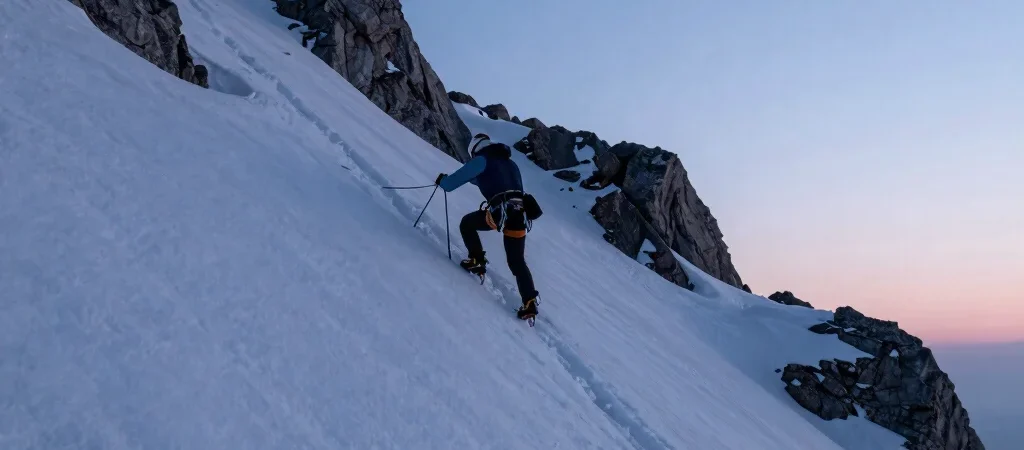
The beam of a headlamp at four in the morning reveals details easily missed by daylight. On early spring alpine starts, the condition of the surface crust dictates everything from our travel speed to our descent window. A firm melt-freeze layer offers fast progress, but subtle texture changes underfoot signal shifting avalanche hazards and compromised stability.
Identifying the Melt Freeze Horizon
As elevation gain accumulates, overnight temperature drops affect snow cohesion differently across aspects. Testing boot penetration every hundred meters provides immediate field observations on how deep the refreeze has penetrated. When the crust breaks easily beneath a boot heel, it is time to reassess slope angle and potential solar loading later in the morning.
Adjusting Rope Team Spacing on Variable Surfaces
Transitioning between firm firn snow and wind-drifted powder requires active rope management. Keeping proper spacing on the rope team prevents shock loading if a team member punches through a fragile wind slab. Clear verbal communication ensures everyone adjusts crampon technique before stepping onto steeper, icy thresholds.
Establishing Hard Deadlines Before Solar Warming
South-facing couloirs transform rapidly once direct sunlight hits the rock walls above. Setting a firm turn-around time based on ambient temperature and solar radiation keeps the team out of fall zones during peak slush hours. The ridge line is only safe when timing matches the mountain's daily freeze cycle.